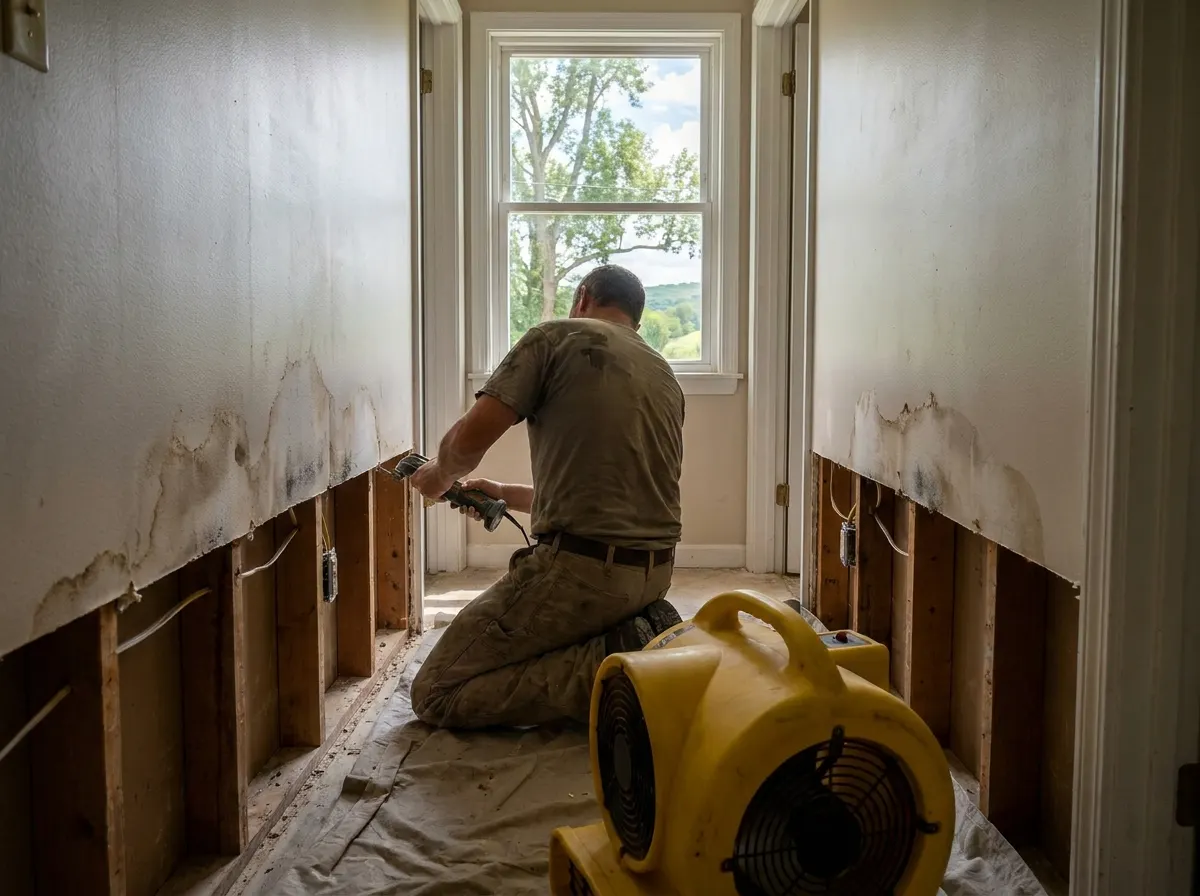
Signs of water damage you might be missing
Some water damage is impossible to ignore. A wet carpet, a dripping ceiling, a puddle under the washing machine. But a lot of it hides.
Ceiling water damage often starts as a faint yellow or brown ring that slowly spreads. Drywall water damage can feel soft or spongy before it ever looks wrong. A musty smell in a closet or cabinet sometimes means water has been sitting somewhere nearby for a while.
Louisville Water notes that leaks often hide on floors and ceilings, at the backs of cabinets, and in crawl spaces. Nearly 1 in 5 homeowners contact Louisville Water each year with concerns about leaks.
If something feels off, it is worth having a professional look at it.
Where water damage comes from
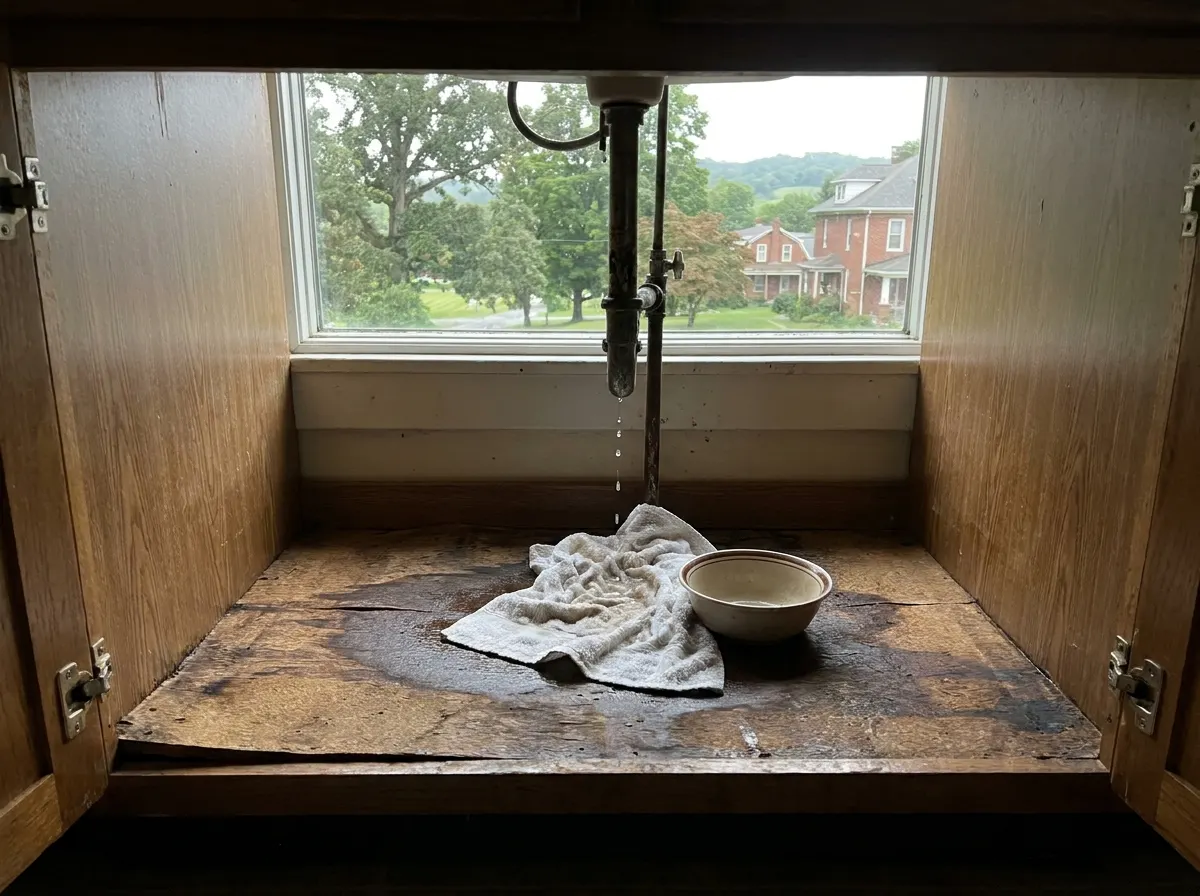
A lot of water damage starts with pipes and appliances: supply lines, water heaters, washing machines, dishwashers, and refrigerator lines. Roof damage after a storm can send water down through attic insulation before it ever shows up on a ceiling. Gutters that are clogged or pulling away from the house push water toward the foundation.
Water damage cleanup is not always about a dramatic flood. A slow drip behind a wall, left long enough, can do real damage and lead to mold.
The EPA is clear on this: dry wet materials within 24 to 48 hours and in most cases mold won't grow. Wait longer, and the job gets more complicated.
That stain is spreading, and the floor feels soft underfoot.
Water has a way of going further than you think, soaking into drywall and subfloor before you even notice. The longer it sits, the more it quietly does.
One of the area's best restoration companies finds where the moisture went and dries it out properly, not just on the surface. Your walls and floors get the attention they actually need.
Get Connected NowReach one of Louisville's top-rated water damage companies, free quote, no obligation. Call (502) 754-4273
What water damage repair usually involves
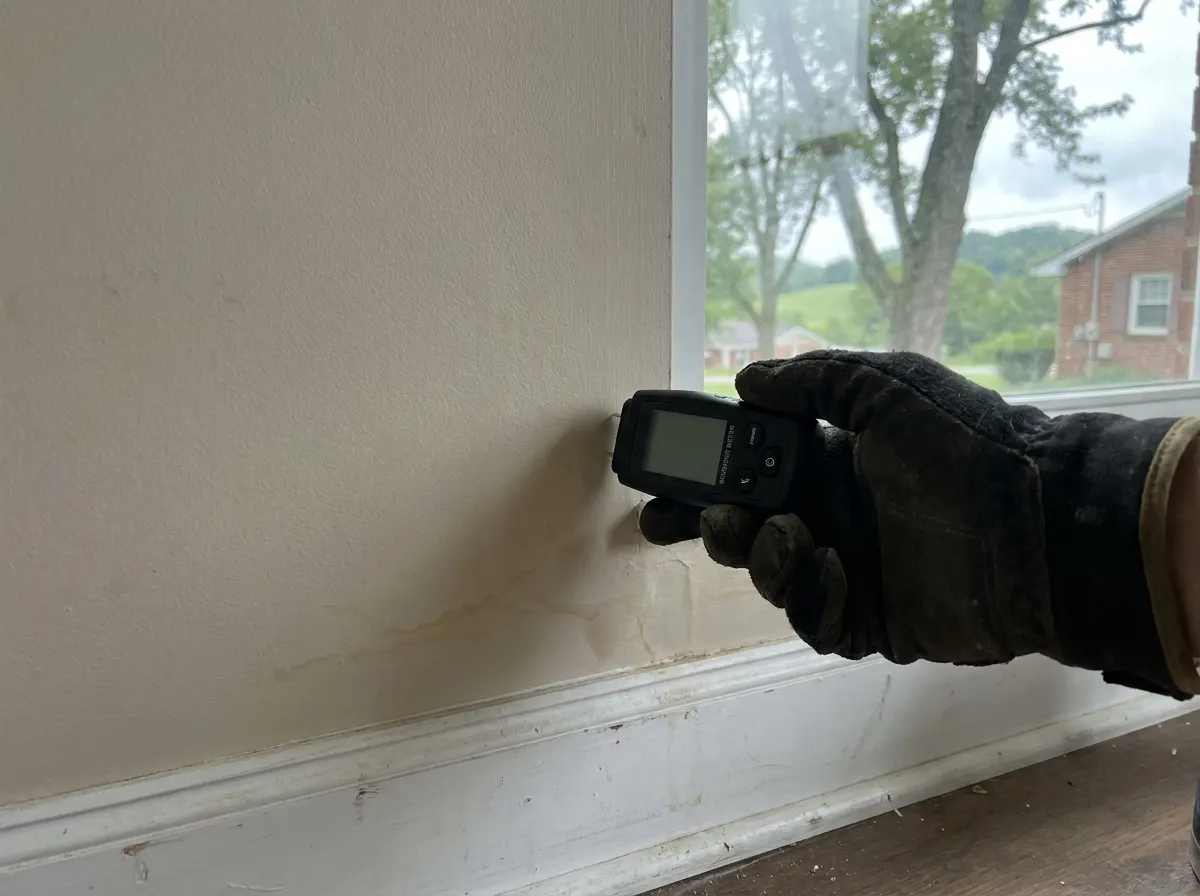
A restoration company may begin by finding the extent of the moisture using moisture meters. From there, the process typically includes water removal, setting up commercial drying equipment, and removing materials that cannot be dried, like soaked drywall or saturated insulation.
Once the structure is dry, the repair phase begins. That might mean replacing drywall, flooring, trim, or insulation.
One thing to keep in mind: fixing the source of the water is a separate task from drying and cleanup. A burst pipe needs a plumber. A damaged roof needs a roofer. The restoration company handles the water damage itself, but the leak may need its own specialist.
Restoration companies sort water into three categories, from clean (like a broken supply line) to grossly contaminated (like sewage or river floodwater). Which one you have changes how the job is done.
What to know about insurance before repairs start
Homeowners policies are generally written for sudden, accidental damage. A burst pipe is the kind of sudden event these policies are written for. A slow leak that went unnoticed for months, or damage from general wear and tear, is a common exclusion. Your policy decides what's covered, so read it or ask your agent.
Kentucky's Department of Insurance advises homeowners to take steps to prevent further damage right away, like water removal, but to hold off on permanent repairs until the adjuster has seen the situation. Meet the adjuster before signing any repair contract.
Take photos before you move or throw anything out. Save a piece of anything you do discard if you can. Keep every receipt, including anything you spend on emergency supplies. Those records support your claim.
Since April 2, 2024, Kentucky law prohibits signing your insurance benefits over to a contractor. You can still have the insurer pay a contractor directly for covered work. If the insurer tells you in writing that part of your claim is not covered, you have 5 business days to cancel an insurance-paid repair contract, though a contractor who did emergency work to stop further damage can still charge a reasonable amount for it.
How to choose a water damage repair company
Get a written contract before any work starts. It should spell out exactly what will be done, the total cost, and the completion date. Kentucky's Department of Insurance says never to pay the full amount before the work is complete.
Ask for references and check them. Make sure the company carries its own insurance. Be cautious of anyone who pressures you to sign immediately or asks for full payment upfront.
Frequently asked questions
How do I know if the water damage is serious enough to call a professional?
If you can see staining, smell something musty, or feel soft spots in drywall or flooring, it is worth a call. Hidden moisture can affect framing and lead to mold growth. A local company can assess the situation and let you know what you're dealing with.
My ceiling has a water stain but it seems dry now. Do I still need someone to look at it?
A dry stain does not always mean the problem is gone. Moisture can remain inside walls or above ceiling panels even after the visible wet spot dries. Drywall water damage that is not fully dried can lead to mold or structural softening over time. Call or fill out the form to get connected with a local water damage restoration company who can check what's behind the stain.
Can I do the repairs myself?
Small, clearly contained issues may be manageable on your own. But if water has reached insulation, framing, or subfloor, or if the source was contaminated water, a professional assessment is the safer call. The EPA notes that materials touched by sewage or dirty water usually need to be replaced, not just dried.
The sooner it's assessed, the better.
Call now or fill out the form to get connected with one of Louisville's top-rated restoration companies.